
If you’ve heard the word and weren’t sure
Stoicism is a 2,000-year-old way of practicing how to live. Here’s what it means for your kid — in plain English.
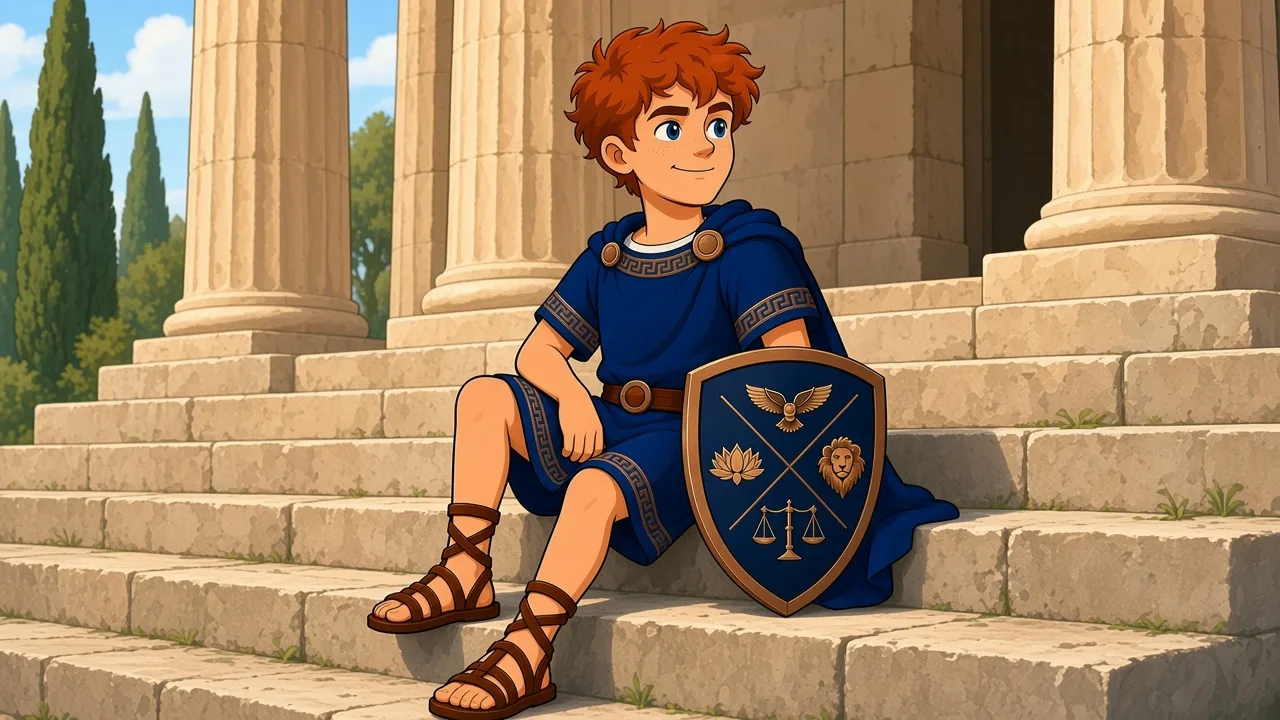
The short version
You don’t control everything that happens. You always control your next move.
Read the longer version
Where the idea comes from
Stoicism started in ancient Greece and Rome. It was never a club for tough guys. It was a set of everyday habits for living well: noticing what’s going on, thinking before acting, and treating people fairly. Some of the people who practiced it were a teacher who had been enslaved (Epictetus), a Roman emperor (Marcus Aurelius) and a writer who sent letters of advice to a friend (Seneca). They wrote about the same problems kids run into: losing, being left out, feeling angry, wanting too much of something.
None of it asks kids to hide their feelings. It gives them a way to handle a feeling once it shows up.
Put energy where it counts
The core idea is that some things are up to us and some aren’t. Epictetus opens his handbook with it:
“There are things which are within our power, and there are things which are beyond our power.” — Epictetus, Enchiridion 1
Here’s what that looks like for a kid. The ref’s call, the weather on game day, whether a friend invites them over: none of that is up to them. How hard they practice, what they say next, and whether they ask someone else to hang out are up to them.
Once kids learn to sort a problem into those two piles, a lot of wasted worry goes away. Their energy goes to the pile they can actually change.
Take a breath, then choose
The second habit is a pause. Epictetus noticed that our reaction comes partly from the story we tell ourselves about what happened:
“Men are disturbed not by things, but by the views which they take of things.” — Epictetus, Enchiridion 5
Say a younger brother knocks over a Lego build. The first story is usually “He did it on purpose and he ruins everything.” One slow breath leaves room for a second story: “He’s four. It was an accident. I can rebuild it, and maybe put it on a higher shelf.”
The feeling is still there. The pause just keeps the feeling from making the decision. Feel it, don’t immediately become it, then choose.
Four old habits worth building
The Stoics named four virtues. In kid words: think it through, be brave, be fair, don’t overdo it.
Wisdom (think it through). Before turning in a test, a kid checks the questions they rushed. Before answering a mean text, they ask, “What happens after I send this?”
Courage (be brave). Raising a hand when they don’t get the lesson. Saying “That’s not funny” when a group is picking on someone. Trying out for the team even though they might not make it.
Justice (be fair). Making sure the new kid gets a turn. Telling the truth about who broke the lamp, even when it was them. Splitting the last slice of pizza evenly.
Temperance (don’t overdo it). Stopping the video game when they said they would. Having one cookie instead of five. Not saying the comeback, even when it’s a good one.
Marcus Aurelius had a line for the moment someone treats you badly:
“The best kind of revenge is, not to become like unto them.” — Marcus Aurelius, Meditations 6.6
Kids get this one right away. If someone is rude, being rude back just means there are two rude people.
How the monthly letter practices it
Ideas only stick when they get used, so every Kid Stoic envelope follows the same rhythm: story, tool, monthly challenge.
- The letter from Linc (Kid Stoic) tells a real kid-sized story, like a bad game or an argument with a friend, and shows the habit that helped. It’s Created by a kid, for kids, so it sounds like a peer and not a lecture.
- The challenge card gives one small thing to try that month, such as “Before you react this week, count three breaths,” or “Do one brave thing you’ve been avoiding.”
- The philosopher card introduces one Stoic and one short idea, in plain words.
- The bookmark keeps that month’s habit somewhere they’ll see it.
- The sticker is for marking the challenge done, or just for fun.
Envelopes arrive on the 15th, addressed to your kid by name. Getting real mail is part of the point: it’s theirs, it’s not a screen, and it gives you something to talk about.
How parents can help
You don’t need to know any philosophy. A few small things make the letter go further:
- Let them open it. Don’t preview it. Ask about it later, once they’ve read it.
- Ask one question. “What’s this month’s challenge?” works better than a quiz.
- Use the words. In a tough moment, try “Is that one up to you?” or “Take a breath, then choose.” The shared language does a lot of work.
- Go first. Say out loud when you’re sorting something into “up to me” and “not up to me.” Kids copy what they see.
- Skip the scorekeeping. A missed challenge isn’t a failure. The hard thing is the practice.
Start their first letter
One envelope a month, addressed to them, for $9 per month. Cancel anytime. US shipping included.
What it is NOT
- Not “don’t have feelings”
- Not “be tough and stay quiet”
- Not a religion
- Not homework
What kids practice
Put energy where it counts
Some things you can change. Some you can’t. Put energy where it counts.
Take a breath, then choose
Feel it. Don’t immediately become it. Take a breath, then choose.
Four old habits
Four old habits worth building: wisdom, courage, justice, temperance.
Wisdom
Courage
Justice
Temperance
The hard thing is the practice.
How Kid Stoic teaches it
Story → tool → monthly challenge. No jargon required.
ConfidenceEmotional regulationDeeper maturity
- Cancel anytime
- Secure checkout
- Ships on the 15th
- US shipping included